Criterion
-
Typical units
-
Primary fire rules
-
EU marking route
-
Acoustic priority
-
Weight sensitivity
-
Who reviews the file
Offshore flooring is a compliance question before it is a material question. The covering itself may be the same vinyl, carpet or resin you would specify on a ferry — but the route that makes it acceptable depends on whether the unit is a ship under a flag or a fixed installation on a coastal state’s shelf, and the two routes hand you different paperwork.
This page sets out which rules apply where, how an A-60 deck build-up is actually assembled, what changes zone by zone in an accommodation module — and which screeds, deck coverings and insulation Trivaro supplies for offshore work across Europe.

An offshore floor carries the same fire and slip duties as a ship's floor, then adds the consequences of being hours from shore with a fixed crew change window. Six pressures shape the specification.
A-class deck and bulkhead ratings decide the build-up before aesthetics enter the conversation. The rating belongs to the whole construction, and the certificate names a system — not a single product.
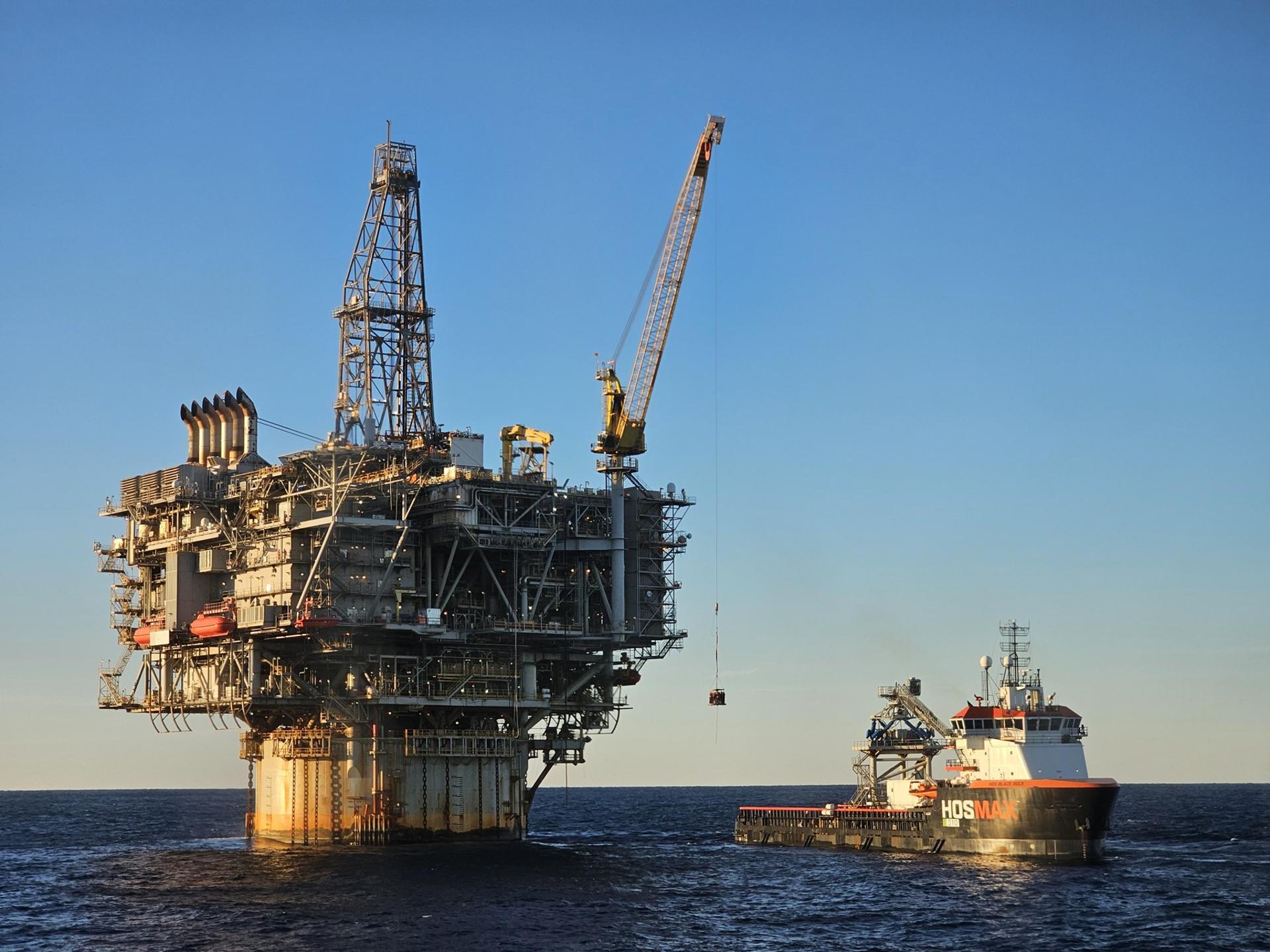
Mobile units follow SOLAS and the MODU Code. Fixed installations answer to the coastal state — and on the Norwegian shelf, to NORSOK. Same materials, different certificate set.
Every kilo of floor build-up is topside weight. Screed density and floating-floor construction are selected against a kg/m² allowance, which is why lightweight mineral screeds exist at all.
Cabins sit over pumps, thrusters and generators on rotation-length stays. Impact and structure-borne sound are handled in the floor, by decoupling rather than by mass alone.
There is no closing the floor for a week. Systems are chosen for service life and for repairability in short windows with the unit working around them.
Exterior decks and machinery spaces take seawater, hydrocarbons and pressure cleaning. Corrosion protection under the covering matters as much as the covering.
Rule of thumb: if it has a flag, specify it like a ship. If it stands on the seabed, specify it to the coastal state's regime. The fire-tested materials overlap almost completely — the documentation does not.
Typical units
Primary fire rules
EU marking route
Acoustic priority
Weight sensitivity
Who reviews the file
Drilling rigs, semi-subs, jack-ups, FPSOs
SOLAS II-2 via the IMO MODU Code
MED / wheelmark where EU-flagged
High — permanent crew accommodation
High on topsides and upper decks
Flag administration and class society
Production platforms, substation topsides
Coastal state offshore regime; NORSOK on the NCS
Not a ship — no wheelmark route
High where manned, low where visited only
High — every kilo is topside weight
Operator and national safety authority
SOVs, CTVs, cable-lay and installation vessels
Ordinary SOLAS Chapter II-2 — it is a ship
MED / wheelmark where EU-flagged
Very high — rotation crews sleep aboard
Moderate — naval-architect driven
Flag administration and class society
A deck build-up is a stack, and we supply it as one: corrosion protection, levelling or insulating layer, then the walking surface. Tell us the deck's job and its fire class — we return the system.
A zone list and the unit's legal character are enough to start. No public price list — every offshore package is quoted on the systems and quantities it actually needs.
Ship under a flag or fixed installation, the shelf it works on, and the fire divisions in play. That settles the certificate route before any material is chosen — and stops a late surprise at file review.
Deck areas by zone in m², the kg/m² budget on topsides if one is set, acoustic requirements over machinery, and any operator or NORSOK requirement to meet. Drawings help but are not needed to start.
A recommended build-up per zone with datasheets and certificates for the file, followed by a B2B quotation and delivery schedule across Europe from our Estonian warehouse.
The certification and build-up detail behind an offshore floor.
What IMO and MED approval actually covers, who issues it, and how to read a certificate.
The six-layer build-up, SOLAS limits and the systems that achieve an A-60 deck.
Indicative kg/m² by system family and how to read weight off a datasheet.
The full catalogue of screeds, resin coverings, insulation and primers.
What operators, yards and offshore contractors ask when scoping a deck package.
It depends on what the unit is. Mobile offshore units — drilling rigs, semi-submersibles, jack-ups, FPSOs, SOVs and CTVs — are registered under a flag and follow the ship route: SOLAS Chapter II-2 and the IMO MODU Code, which provides a standard of safety equivalent to that required by SOLAS for conventional ships. Fixed installations are not SOLAS ships; their flooring answers to the coastal state’s offshore regime, and on the Norwegian Continental Shelf that is where NORSOK standards apply. In practice the same fire-tested materials serve both routes — what changes is the certificate set you hand over.
A-60 is a fire division class: a steel deck or bulkhead insulated so the unexposed side stays within defined temperature limits for 60 minutes of a standard fire test. A-class divisions are defined in SOLAS regulation II-2/3 and carried into the MODU Code, so the same language is used on rigs and on ships. On a deck the rating belongs to the complete build-up — steel plate, insulation, screed or floating floor, final covering — never to one product alone, which is why an approval certificate always names a system. Detail in our A-60 guide and the A-60 vs B-15 comparison.
Living quarters are specified much like a ship’s accommodation block: a levelling screed or floating floor over the steel deck, then an IMO fire-tested covering — homogeneous or heterogeneous vinyl, LVT or marine carpet — chosen for wear, cleaning and acoustics. Cabins over machinery or above other occupied decks take an acoustic build-up. Galleys, laundries and sanitary spaces move to welded slip-resistant systems or resin coatings. On fixed Norwegian installations, NORSOK C-002 additionally governs the architectural components around the floor: doors, bathroom units, barriers and signage.
Service operation vessels and crew transfer vessels are ships, so their interiors follow the ordinary SOLAS and MED route — fire-tested coverings, acoustic build-ups in cabins because rotation crews sleep aboard, slip-resistant systems in galleys and wet areas. Offshore substation topsides are usually unmanned or only visited, so the emphasis shifts to electrical-room floors, walkability, corrosion protection and coatings that survive years between maintenance visits rather than to comfort and acoustics.
Yes. We supply the GTF Freese marine programme — epoxy and polyurethane deck coverings and coatings, quartz-broadcast build-ups, synthetic teak for exterior decks, mineral levelling screeds and corrosion-protection primers — plus ROCKWOOL SeaRox stone wool for insulating and A-60 constructions. Resin choice follows the deck’s job: rigid epoxy where mechanical and chemical load dominate, elastic polyurethane where movement, comfort or impact sound matter.
Yes — we are a materials supplier, and most offshore work reaches us as a materials package for the yard’s or operator’s own contractor. We quote per system and zone, deliver across Europe from our Estonian warehouse, and supply the certificates and datasheets the classification or authority file needs. Where a project wants it, installation by certified teams can be arranged separately.
Trivaro supplies offshore deck systems across Europe — mineral screeds, A-60 floating floors, epoxy and polyurethane deck coverings, synthetic teak, stone wool insulation and corrosion primers — with the certificates and datasheets your classification or authority file needs.
Tell us whether the unit is flagged or fixed, the zones and areas, and any weight or acoustic limit — we respond with a recommended build-up per zone and a B2B quotation.