Specification
-
Total thickness
-
Base
-
Density
-
Compressive strength
-
Flexural strength
-
Pack size
-
Water demand
-
Application temperature
-
Pot life
-
Fire class
-
Installation
TEFROLITH is the range of fire-rated insulating floor systems made by GTF Freese in Bremen. Where a primary deck covering only levels the steel, a TEFROLITH floor also insulates it — it is the layer that lets a deck meet an A-class division requirement from the floor side, leaving the deckhead in the space below free.
All three systems are A-60 rated under IMO FTP Code 2010 Part 3. The choice between them comes down to two things: whether the floor has to carry load, and whether impact sound is in the specification.
FF-STEEL is a decoupled floating construction; TEFROLITH M and FTG-35 are poured build-ups. Specs are pulled live from our catalogue — the same data that goes into a quotation.
Total thickness
Base
Density
Compressive strength
Flexural strength
Pack size
Water demand
Application temperature
Pot life
Fire class
Installation
—
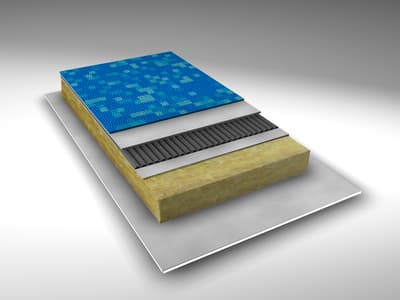
Floating floor system with mineral wool insulation (SeaRox 436)
—
—
—
—
—
—
—
A-60 (IMO FTP Code 2010)
—
25 mm
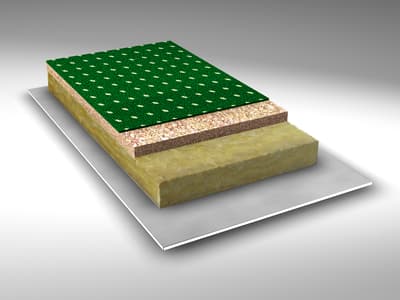
Magnesite screed on mineral fiber insulation
1300 kg/m³
30 MPa
7 MPa
25 kg
—
10-30 °C
30 min
IMO FTP Code 2010 Part 3
Hand application
35 mm
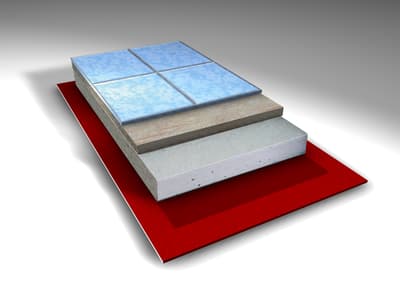
Cement-based mortar
1000 kg/m³
7 MPa
2 MPa
16 kg
7 l / bag
10-30 °C
30 min
IMO FTP Code 2010 Part 3
Hand application
Fire rating is common to all three. Load, weight and acoustics separate them.
TEFROLITH is one layer of an A-60 build-up. These pages cover the rest of it.
The full build-up explained layer by layer, with the SOLAS limits behind the rating.
What the division classes mean and which one your deck actually needs.
Indicative kg/m² per system family and how to read a deck-covering datasheet.
Mass-spring behaviour, IMO MSC.337(91) limits and flanking transmission.
The levelling screed that goes onto the steel where no fire rating is required.
The full category — screeds, coatings, insulating systems and primers.
What specifiers ask when an A-class division involves the floor.
TEFROLITH is the range of fire-rated insulating floor systems made by GTF Freese in Bremen. Where a primary deck covering only levels the steel, a TEFROLITH floor also insulates it — it is the layer that lets a deck meet an A-class division requirement from the floor side instead of adding insulation underneath. All three products are A-60 rated and certified under IMO FTP Code 2010 Part 3.
A-60 is a SOLAS fire division class: the division must keep the average temperature on the unexposed side below 140 °C for 60 minutes of a standard fire test. On a deck, that rating can be achieved from above by building an insulating floor onto the steel — which is what the TEFROLITH systems are certified to do, so the deckhead below stays free.
FF-STEEL is a floating floor system: a board on SeaRox 436 mineral wool, mechanically decoupled from the deck, which is what gives it acoustic performance as well as fire rating. TEFROLITH M is a magnesite screed laid at 25 mm over mineral fibre insulation — strong (30 MPa) and the option where the floor takes load. FTG-35 is a 35 mm cement-based mortar at 1000 kg/m³ and 7 MPa, the lighter of the two poured systems.
Only the floating construction does. FF-STEEL is decoupled from the steel by the mineral wool layer, so it behaves as a mass-spring system and attenuates impact sound. The poured systems, TEFROLITH M and FTG-35, are bonded build-ups: they carry the fire rating but not the acoustic decoupling. If the specification asks for both, the floating system is the one to price.
The poured systems are the heavier ones: FTG-35 at 1000 kg/m³ over 35 mm is roughly 35 kg/m², TEFROLITH M at 1300 kg/m³ over 25 mm is roughly 33 kg/m² — before the insulation layer and the finished floor. Weight is usually the deciding constraint on upper decks, so it belongs in the first conversation, not the last.
Send the required division rating, the deck area, the allowed build-up height and whether impact-sound performance is in scope. Trivaro supplies GTF Freese across the EU on B2B terms and quotes the whole build-up — insulation, screed or board, and the finished floor — with certificates.
Send the division rating, the deck area, the build-up height you can afford and whether impact sound is in scope. We quote the certified construction end to end — insulation, screed or board, and the finished floor — with the certificates that cover it.
A certificate applies to the tested build-up, not to a single product. If you have a specification already written, send it and we will check it against what is actually certified.