Criterion
-
Moisture resistance
-
Dimensional stability
-
Underfoot comfort
-
Acoustic performance
-
Renovation speed
-
Repair/replace
-
Weight/handling
-
Typical use
Waterproof, rigid‑core SPC planks/tiles with excellent dimensional stability for fast refurbishments and demanding zones. B2B supply & installation.
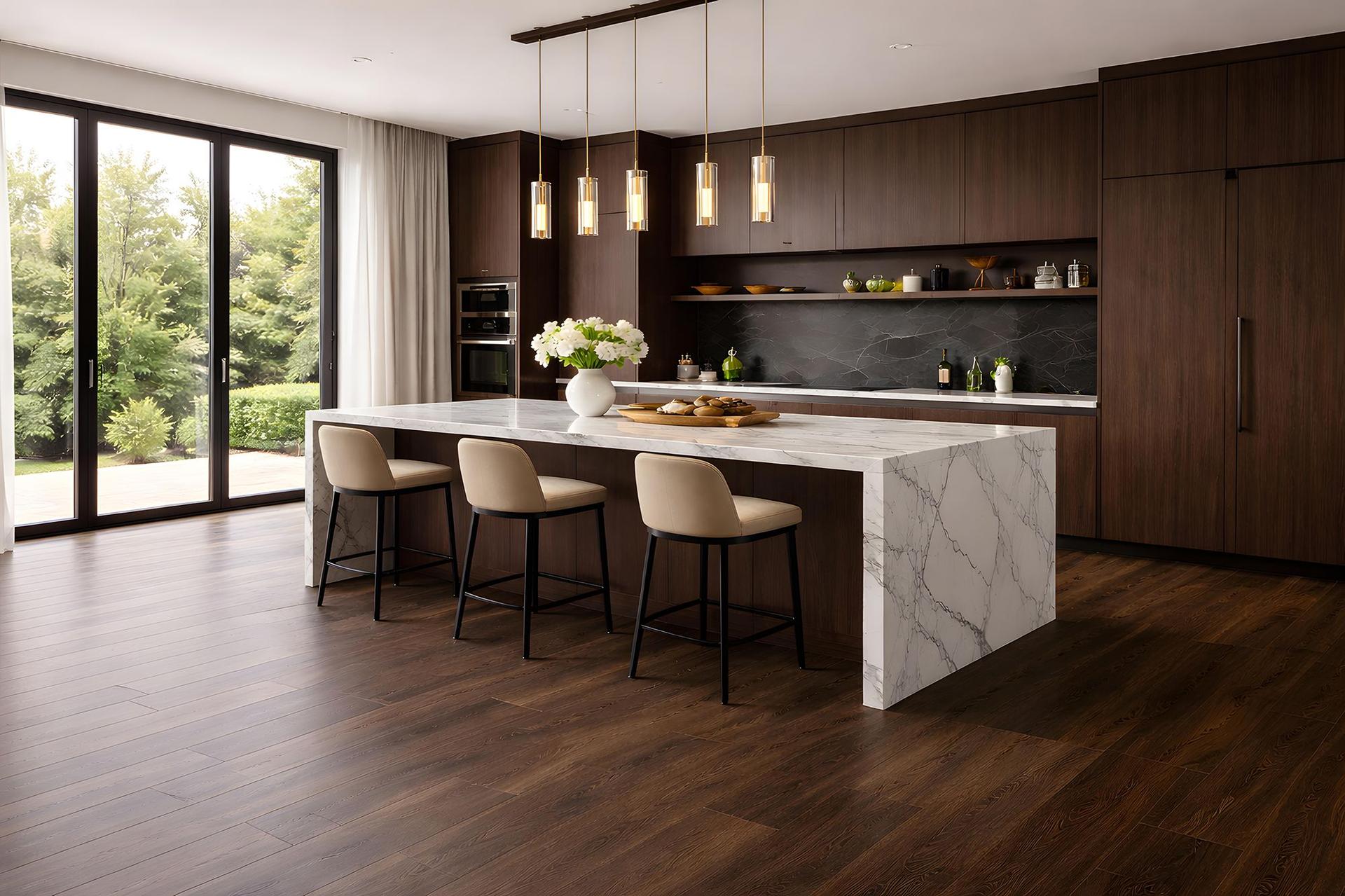
SPC (Stone Plastic Composite) is a rigid‑core vinyl plank/tile with a mineral‑filled core that delivers exceptional dimensional stability and waterproof performance. It shines in renovations, areas with temperature variation, and occupied‑space fit‑outs where speed and minimal downtime matter.
Rigid mineral‑filled core resists expansion/contraction across temperature swings.
Waterproof core handles kitchens, corridors and spill‑prone zones (not wetrooms).
Click floating system for room‑by‑room turnover with minimal disruption.
Modular planks/tiles allow spot swaps without affecting adjacent areas.
Options with recognized indoor air labels — certificates on request.
Coordinated wood/stone décors across rooms, corridors and amenities.
Rule of thumb: choose SPC for extreme temperature swings, demanding subfloors, or spill‑prone zones. Choose LVT for underfoot comfort and acoustic performance. Choose laminate for residential or light commercial budgets.
Moisture resistance
Dimensional stability
Underfoot comfort
Acoustic performance
Renovation speed
Repair/replace
Weight/handling
Typical use
Very high (waterproof core)
Excellent (rigid)
Medium
Medium (needs underlay)
High (click)
Easy (tile/plank)
Light‑medium
Retail, kitchens, corridors
High
Good
High (with underlay)
Good (with underlay)
High (click) / Medium (glue)
Easy (tile/plank)
Light
Offices, retail, MFH
Medium
Medium
Medium
Medium
High
Medium
Light
Residential/light commercial
Different commercial environments put different demands on SPC. Here is how to specify the right wear layer, underlay and edge detail by sector — so your project lands on spec the first time.
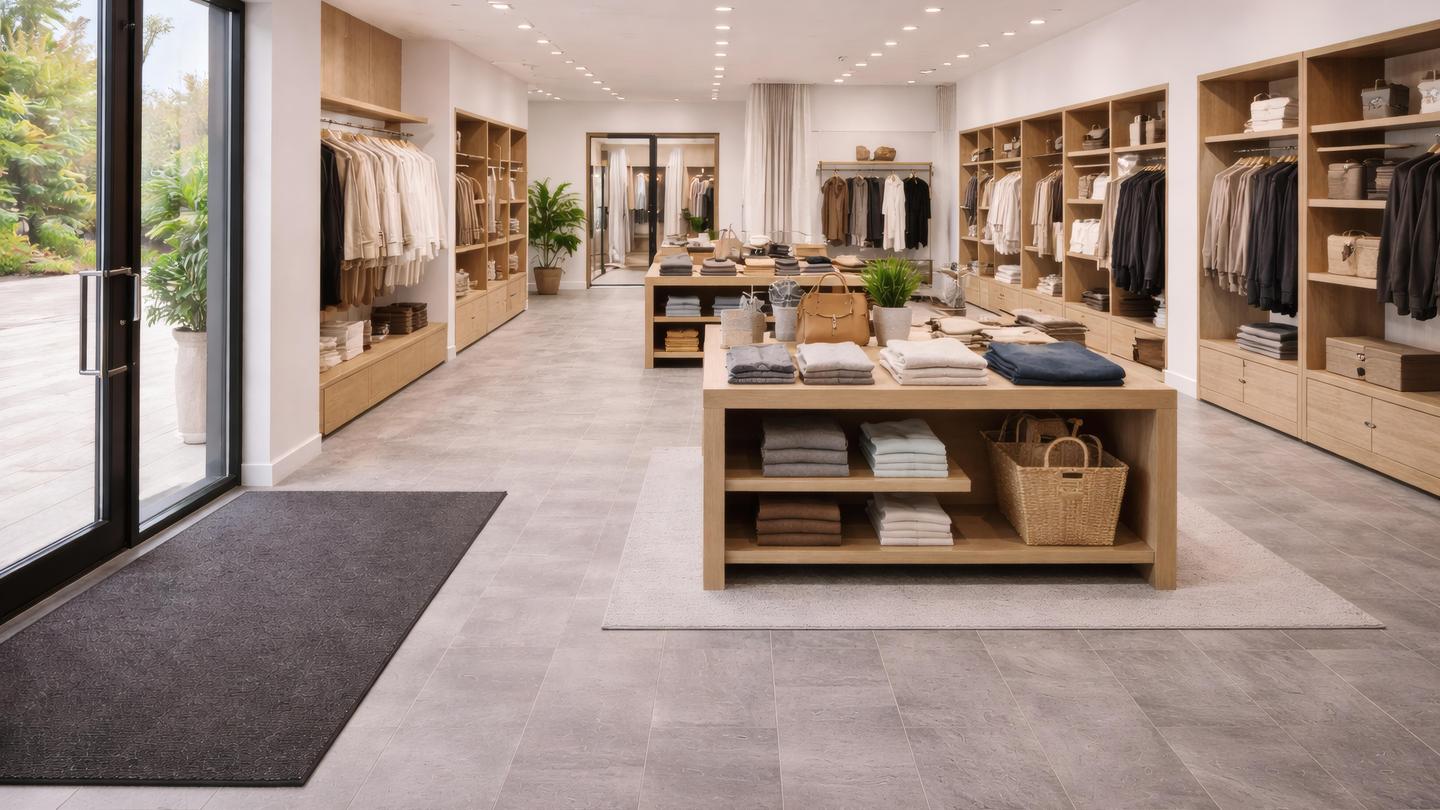
Choose wear layer ≥0.55 mm for main aisles; use entrance matting to reduce grit‑related wear. SPC tolerates thermal swings near shopfronts and large windows where LVT can struggle.
Fast room‑by‑room turnover for tenant improvements and apartment refurbishments. Pair with an acoustic underlay in meeting rooms and apartments to enhance comfort and impact‑sound performance.
Corridor‑ready planks/tiles withstand frequent cleaning. Plan transition‑free zoning across rooms and hallways to simplify maintenance and keep visuals continuous.
Materials supply with optional professional installation. Or use your own contractor/installer.
Cartons to bulk pallets.
Stock vs made‑to‑order by décor.
Datasheets, DoP/DoC, fire/slip tests, EPD/LCA on request.
Planks/tiles, finish boards.
Assistance with spec wording and maintenance plans.
Here you’ll find answers to the most common questions our customers ask when choosing SPC flooring. This section is designed to help you make confident and informed decisions. If you don’t see the information you’re looking for, feel free to contact our support team — we’re always here to help.
Yes — SPC’s waterproof core and rigid stability make it a strong choice for kitchens and corridors (not for wetrooms).
Rigid core improves stability vs LVT; still manage solar gain and respect expansion joints near glazing.
Often yes, if flatness and moisture are within limits. Otherwise remove/prepare the substrate.
Comfort is medium; pair with acoustic underlay if higher comfort/dB reduction is required.
Evaluate glue‑down LVT; while SPC is robust, bonded systems often perform better for intensive rolling traffic.