Criterion
-
Acoustics
-
Comfort & warmth
-
Traffic & castors
-
Cleaning & stains
-
Phased refurbishment
-
Wet areas
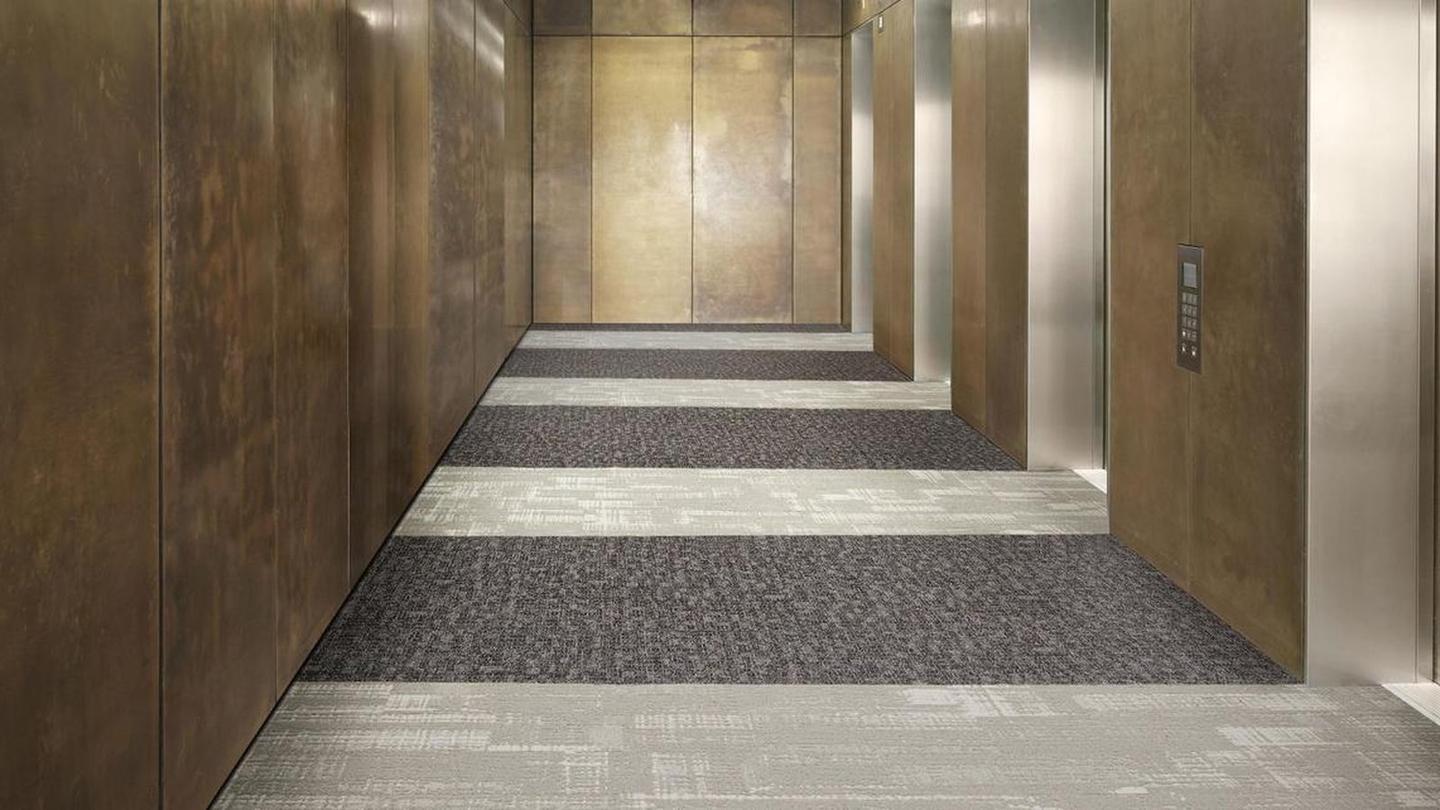
Hotel flooring is a zone-by-zone specification: carpet for corridors and guest rooms where acoustics and comfort sell the stay, Class 33 LVT and wood for lobbies, restaurants and bars, barefoot-rated wet-area systems for spa and pool, and R11–R12 safety vinyl behind the kitchen doors — one property, four or five floor systems working together.
This guide walks through the zones, the acoustic and fire classes that decide a hospitality spec, where woven carpet still beats everything else — and the Tarkett and DESSO ranges Trivaro supplies across the EU.
A hotel floor works around the clock and is judged by every guest who walks in. Six stresses shape the specification — and each zone weighs them differently.
Impact sound is the number-one comfort complaint in hotels. Corridor and guest-floor coverings are chosen for acoustics first — carpet inherently, resilient floors via acoustic backings rated in ΔLw.
Luggage, housekeeping and room-service trolleys roll the same corridor lines thousands of times a year — castor-chair and rolling-load ratings stop tracking and wear paths.
The lobby floor is part of the brand. Materials must deliver the design intent — woven pattern, wood, stone — at heavy-commercial durability, not showroom durability.
Floors are cleaned every day for decades. Soil-hiding pattern, stain resistance and maintenance cost per m² decide the real lifetime price — not the purchase price.
Escape routes and public areas carry reaction-to-fire requirements under EN 13501-1 — the floor’s classification and DoP are part of the building’s fire file.
Hotels renew floors floor-by-floor with rooms back on sale the next night. Formats and lead times that support phasing carry direct revenue value.
Tarkett and DESSO contract ranges matched to hotel zones — supplied with use-class, acoustic and fire documentation for the specification file. Tell us the zones — we match the ranges.
Rule of thumb: woven broadloom where the brand lives (premium corridors, function rooms), tiles and planks where phasing and wear-line replacement rule, LVT where spills, moisture and design continuity decide. Most properties run all three.
Acoustics
Comfort & warmth
Traffic & castors
Cleaning & stains
Phased refurbishment
Wet areas
Best-in-class impact and in-room sound
The hospitality comfort benchmark
Heavy contract; woven pile recovers underfoot
Pattern hides soiling; needs programme cleaning
Broadloom — renew by corridor section
Not a wet-area material
Strong acoustic contribution
Contract comfort, design by plank mixing
Heavy contract with castor ratings
Swap stained tiles individually
Fastest to phase around furniture
Not a wet-area material
Up to 19 dB with acoustic backing
Hard floor — warmer than tile, rugs add comfort
Class 33 wear layers take lobby traffic
Wipes clean — spills, sand, pets
Click/looselay formats reopen rooms next day
Wet-area capable in the right system
A zone list is enough to start. No public price list — every project is quoted on the zones, phasing and ranges it actually needs.
Zones and areas (m²), number of guest floors and rooms, refurbishment phasing if the property keeps trading, and any brand-standard or fire requirement. Corridor drawings help but are not required to start.
A recommended range per zone — carpet constructions, acoustic classes, LVT wear layers, wet-area and back-of-house systems — with samples and the use-class, ΔLw and fire documentation for your specification file.
Quantities per zone and phase, lead times per range and a B2B quotation — delivered across the EU on the schedule the refurbishment plan needs.
The specifications and categories around hospitality floors.
R11/R12 slip classes, EU 852/2004 hygiene rules and welded systems for the F&B back-of-house.
Barefoot ratings, welded systems and zone-by-zone specification for spa and pool areas.
Woven Axminster and broadloom ranges for corridors and public areas.
The Class 33 wood- and stone-design LVT family for lobbies, bars and guest rooms.
What operators, designers and contractors ask when scoping a hospitality floor.
Hotels specify zone by zone: carpet in corridors and guest rooms for acoustics and comfort, Class 33 LVT or wood in lobbies, restaurants and bars, barefoot-rated slip-resistant vinyl in spa and pool areas, and R11–R12 welded safety vinyl in kitchens and back-of-house. One property typically combines four or five floor systems, each matched to its traffic, acoustic and safety requirement.
Carpet remains the hospitality standard: it absorbs footfall and trolley noise next to sleeping guests, hides soiling between cleans and reads as comfort. Woven Axminster (80/20 wool-nylon) is the classic premium answer; heavy-contract planks and tiles deliver a similar effect with individual-tile replacement on wear lines. Where a hard floor is wanted, Class 33 LVT with an acoustic backing keeps impact sound in check.
At the covering: carpet is inherently the quietest choice, and resilient floors are specified with an acoustic backing rated in ΔLw (EN ISO 717-2) — commercial acoustic vinyl reaches up to 19 dB of impact sound reduction. Above occupied rooms that rating is the difference between a complaint and a quiet night; it works together with the structural floor’s insulation, not instead of it.
Carpet: warmth, comfort, best acoustics — still the default in mid-scale and luxury rooms. LVT: cleanability, allergy perception, moisture tolerance — strong in aparthotels, resorts and design-led properties, ideally acoustic-backed. Many properties mix: resilient entry and bathroom transition, soft sleeping zone — or wood-look LVT throughout with rugs.
Escape routes and public areas typically require Cfl-s1 or Bfl-s1 to EN 13501-1, with the exact class set by national building regulation and the property’s fire strategy. Every range we supply carries its classification in the Declaration of Performance — we include DoP and classification reports so the fire file is audit-ready.
Yes — that is the normal hospitality pattern. Carpet tiles and planks install around furniture with minimal downtime; click and looselay LVT puts rooms back on sale the next night; stocked ranges such as Axminster in-Stock cut lead times from mill-programme months to weeks. We plan quantities and deliveries per phase — each floor closes once, briefly. Professional installation available.
Trivaro supplies hospitality flooring across the EU — woven Axminster and contract carpet, Class 33 LVT, acoustic vinyl, spa and back-of-house systems — with the use-class, ΔLw and fire documentation your specification file needs.
Send your zone list, guest-floor count and phasing plan — we respond with a recommended range per zone, samples and a B2B quotation built around the refurbishment schedule.