Criterion
-
Hygiene & joints
-
Slip resistance
-
Thermal limits
-
Installation downtime
-
Repair
-
Comfort & noise
Commercial kitchen flooring is slip-resistant flooring rated R11–R12 (DIN 51130) and installed as a watertight, washable system — hot-welded safety vinyl with coved skirtings, or seamless resin at the hottest zones — so cooking lines, prep and wash-up areas stay safe under grease and water and pass an EU 852/2004 hygiene audit.
This guide explains which slip class each kitchen zone needs, what the hygiene regulation actually requires from a floor, where welded safety vinyl is the right answer and where resin or tile still wins — with the certified ranges Trivaro supplies across the EU.
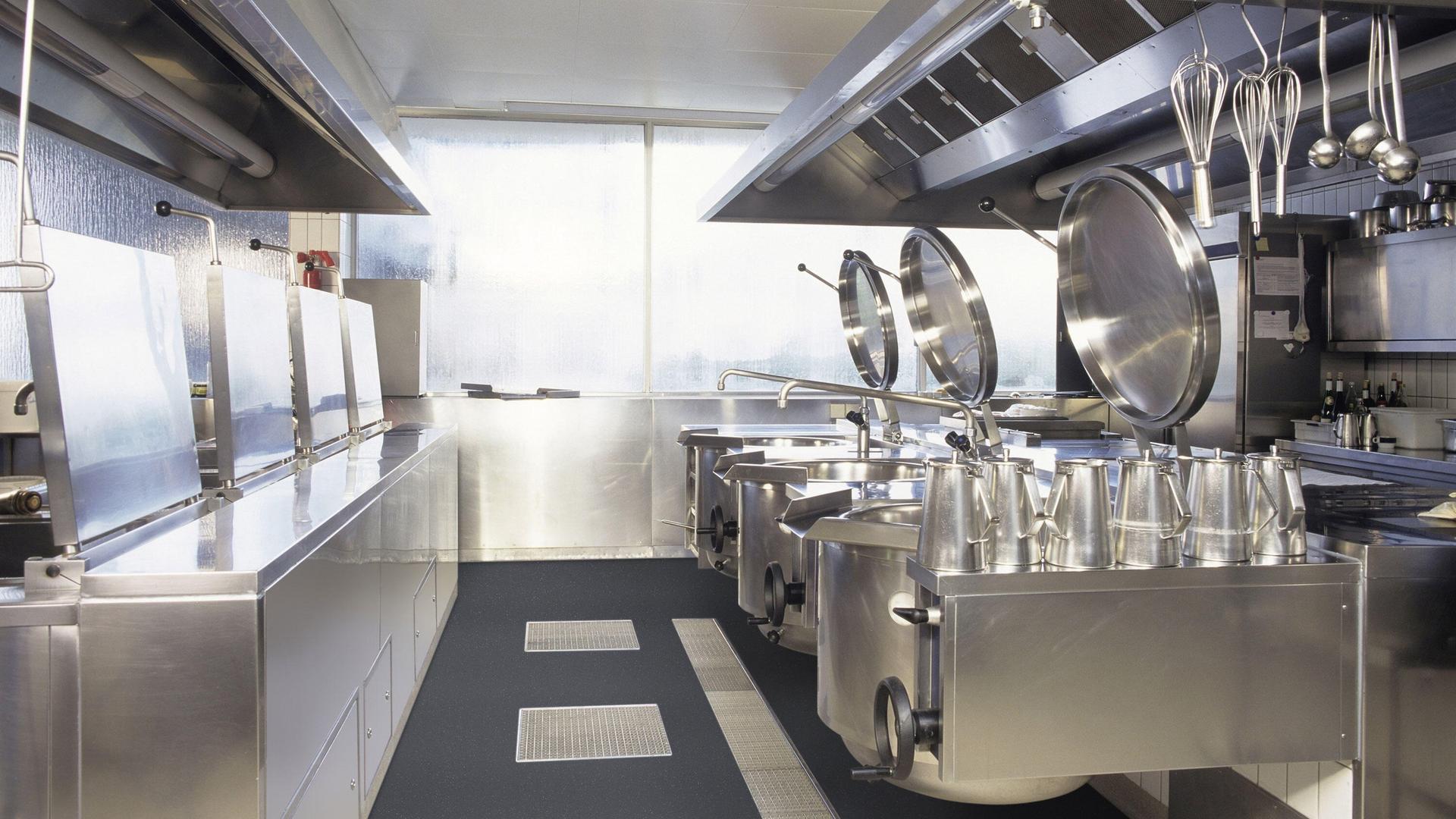
No other commercial floor takes this combination of punishment daily. A kitchen specification starts from these six stresses — and every material choice trades between them.
Oil and water together are the worst-case slip condition — the reason kitchen zones are specified by the oiled-ramp DIN 51130 test rather than dry-floor friction values.
Floors are hosed, degreased and disinfected every day. Joints, grout lines and absorbent surfaces fail here first — hygiene rules effectively demand a continuous surface.
Boiling water, steam and hot fat test every material differently. Resilient floors take splashes and washdown heat; sustained fryer-line temperatures call for resin or tile.
Trolleys, racks, ovens and mixers concentrate weight on small areas. The floor needs verified rolling-load performance and load-spreading detail under static equipment.
EU 852/2004 requires impervious, washable, non-toxic floor surfaces with drainage where needed. Auditors check coving, seams and the floor-to-drain junction — not the datasheet.
A kitchen cannot close for a week. Repairability zone by zone — and fast-curing or welded systems that reopen the same day — carry real operational value.
Certified Tarkett safety vinyl held to a named slip class, supplied with slip-test and hygiene documentation for the specification file. Tell us the zones — we match the range.
Rule of thumb: welded R11/R12 safety vinyl for prep, service and wash-up; resin where sustained heat and hot fat are routine; tile only where tradition or extreme point loads demand it. Many kitchens mix systems by zone.
Hygiene & joints
Slip resistance
Thermal limits
Installation downtime
Repair
Comfort & noise
Seamless welded surface, coved — no grout
R10–R12 sustained (EN 13845)
Splashes & washdown yes; sustained fryer heat no
Fast — rooms reopen quickly
Zone-by-zone patch & re-weld
Resilient and quieter underfoot
Seamless, coved — no grout
Set by broadcast aggregate — verify rating
Handles sustained heat & hot fat
Cure time — days for full service
Section recoat, skilled trade
Hard underfoot, louder
Grout joints — classic audit failure point
Good tile, but grout wears slick
Excellent heat tolerance
Slow — bedding and grouting
Tile swap possible; grout ages
Hard, cold, loud
A short brief is enough for a complete proposal. No public price list — every project is quoted on the zones and system it actually needs.
Kitchen zones and areas (m²), drainage layout if known, equipment lines with heat or point-load concerns, and any client or auditor requirement for slip class. A layout drawing helps but is not required to start.
A recommended slip class and product per zone — R12 sheet, coving, corners, drain kits, and where we would honestly draw the vinyl/resin boundary — with slip-test and hygiene documentation for your audit folder.
Quantities per zone, lead times and a B2B quotation, delivered across the EU — with optional professional installation of the complete welded system.
The specifications and product categories around commercial kitchen floors.
R-classes vs barefoot ratings, welded systems and zone-by-zone wet specification.
Corridors, guest rooms, lobbies and the hotel back-of-house — zone-by-zone specification.
Slip-resistant EN 13845 safety vinyl for wet and dry commercial areas.
Full-thickness commercial vinyl for the toughest traffic — Granit Safe.T, iQ Granit.
What operators, contractors and facility managers ask when scoping a kitchen floor.
For most commercial kitchens: R11–R12 slip-rated safety flooring installed as a watertight system — welded sheet vinyl with coved skirtings for prep, service, wash-up and moderate cooking zones, or a resin (epoxy/PU) floor where sustained heat and hot-fat spillage around fryers demand it. The floor must also satisfy EU Regulation 852/2004 — impervious, non-absorbent, washable and non-toxic — which rules out open joints and porous grout in food areas.
R12 (DIN 51130) for wet and greasy zones — cooking lines, pot wash, waste rooms and sloped floors to drains. R11 for preparation areas and kitchen circulation; R10 only for adjacent dry corridors and stores. The R-class comes from a ramp test with footwear on an oiled surface, so it maps directly to real kitchen conditions.
Annex II requires floor surfaces in food rooms to be maintained in sound condition and easy to clean and, where necessary, disinfect — in practice: impervious, non-absorbent, washable, non-toxic materials with adequate drainage where appropriate. A hot-welded sheet vinyl floor with coved skirtings or a seamless resin floor satisfies this directly; open-jointed modular flooring and worn grout are the classic audit failures.
Both pass hygiene audits — the choice is thermal and operational. Welded R11/R12 safety vinyl: fast to install, comfortable, repairable zone by zone — right for prep, service, wash-up and moderate cooking zones. Seamless resin: right where sustained high temperature and hot fat are routine (fryer and range lines) or under aggressive chemical cleaning. Many kitchens mix both — resin at the hot line, welded vinyl everywhere else, with the junction properly detailed.
Commercial safety vinyl handles hot-water splashes, washdown cleaning and normal rolling loads without special measures. Its limits are sustained contact heat and hot fat at fryer temperatures — those zones are better served by resin or tile, with the vinyl detailed up to them. Under static heavy equipment, load-spreading feet keep point loads within specification.
Yes. R11/R12 safety vinyl (Tarkett Safetred, Granit Safe.T, Primo Safe.T), welding rods, coved skirtings, preformed corners and vinyl-compatible drain kits, with datasheets, DoP and slip-test documentation for your specification file or HACCP audit folder. Delivery across the EU, with optional professional installation.
Trivaro specifies and supplies commercial kitchen flooring across the EU — R11/R12 safety vinyl, welded systems with coving and drains, and the slip-test and hygiene documentation your audit folder needs.
Send your kitchen zones, areas and equipment lines — we respond with a recommended class and range per zone, an honest vinyl/resin boundary where heat demands it, and a B2B quotation.